Should You Repair or Replace Your Air Conditioner? The $5,000 Rule Explained
Should You Repair or Replace Your Air Conditioner? The $5,000 Rule Explained
Should You Repair or Replace Your Air Conditioner? The $5,000 Rule Explained
When your air conditioner starts making strange noises or fails to cool your home on a sweltering summer afternoon, you are immediately faced with a stressful decision: Should you fix the system you have, or is it time to invest in a brand-new one?
To take the guesswork out of this costly choice, industry professionals often rely on a quick, simple mathematical guidelines to evaluate your options.
The $5,000 Rule
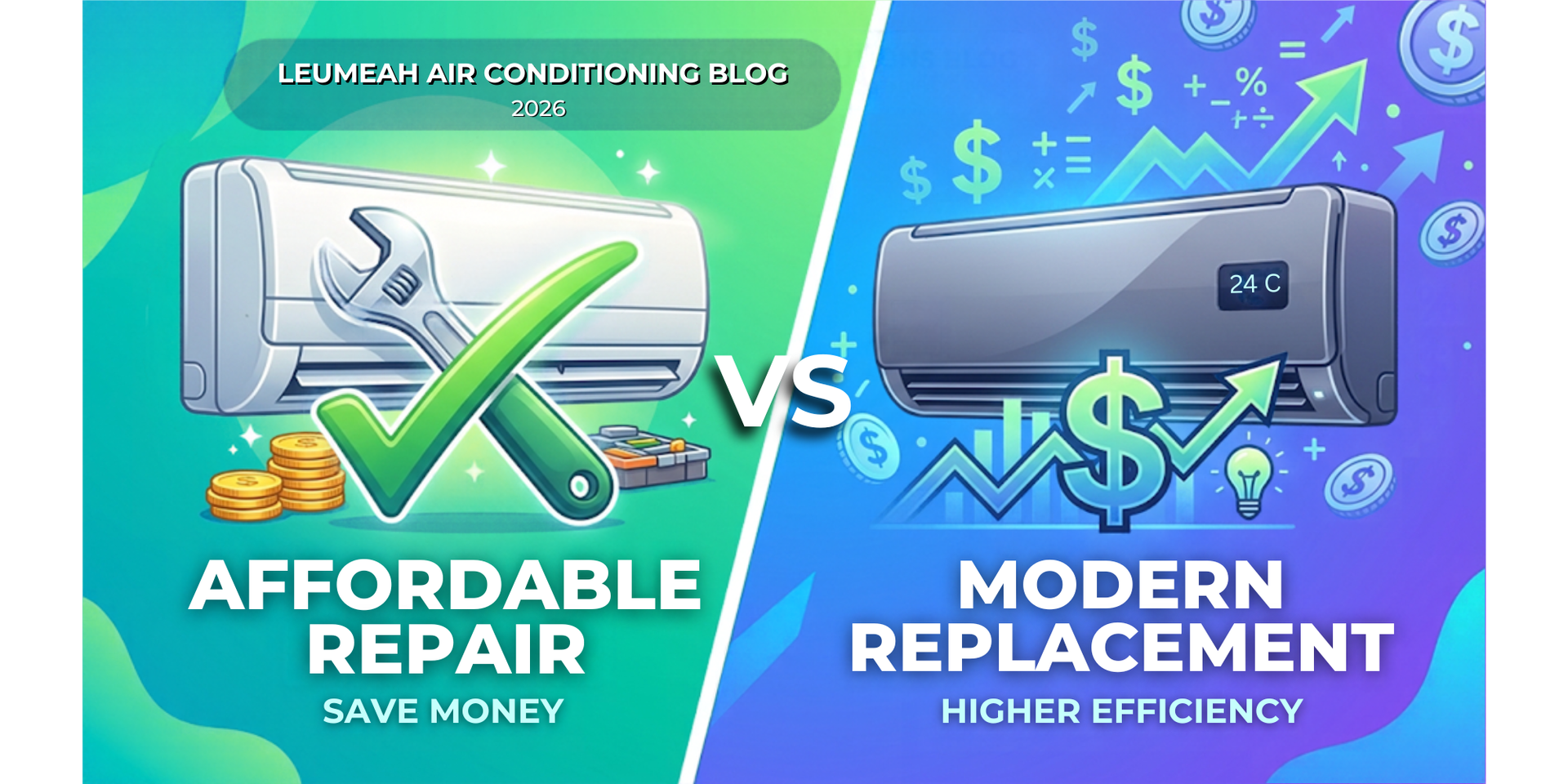
The $5,000 rule is a rule of thumb in the HVAC industry to help homeowners decide whether HVAC repair or HVAC replacement makes more sense in the long run.
The $5,000 rule: Multiply the age of your equipment by the estimated repair cost. If the number is more than $5,000, then you should consider replacing your unit. If it’s less, a repair may be the answer. For example:
- A system that is 10 years old and has a repair cost of $300 = $3,000. It’s probably best to repair it.
- A system that is 10 years old and has a repair cost of $600 = $6,000. You should likely consider a replacement.
Key Questions to Consider Beyond the Math
While the $5,000 rule provides a clear starting point, math doesn't always tell the whole story. To make the best financial decision for your home, ask yourself these crucial questions before making a final choice:
- How frequently has the system broken down recently?
A single $400 repair on an older system might pass the $5,000 test. However, if this is the second or third time you've called a technician this season, those cumulative costs—and the inconvenience of repeated breakdowns—often justify upgrading early.
- What type of refrigerant does your unit use?
Older air conditioners often use R-22 (Freon), a refrigerant that has been phased out due to environmental regulations. Servicing or recharging an R-22 unit is significantly more expensive than maintaining modern R-410A or R-32 systems.
- Have your monthly utility bills spiked unexpectedly?
As components like coils, motors, and compressors age, they lose efficiency and work harder to cool your home. Replacing an old, inefficient unit with a high-SEER (Seasonal Energy Efficiency Ratio) model can lower your monthly energy bills and help offset installation costs over time.
- Is your home staying consistently comfortable?
Consider whether your current system maintains an even temperature, manages indoor humidity, and operates quietly. If your AC struggles to keep up during peak heat waves, paying for repairs won't solve underlying sizing or airflow issues.
- How long do you plan to live in your current home?
If you plan to move within a year or two, a quick repair may be the most practical financial option. If this is your long-term residence, investing in a modern, energy-efficient AC backed by a full manufacturer's warranty will provide peace of mind and long-term savings.
Summary
The $5,000 rule is a great diagnostic tool, but always weigh the calculation against the overall condition, age, and efficiency of your system. If you find yourself on the fence, consult a trusted HVAC professional for an honest assessment before making your final decision.