Mitsubishi Electric vs Mitsubishi Heavy Industries: What's the Difference?
New Title
Two Mitsubishis, one common mix-up
Almost every week, a customer tells us they have "a Mitsubishi" air conditioner. When we arrive, it turns out to be a Mitsubishi Heavy Industries unit, not a Mitsubishi Electric. Others ring asking for a quote on a specific Mitsubishi model they saw online, only to discover it belongs to the other brand.
It is an easy mistake to make. Both brands carry the Mitsubishi name and both sell split systems and ducted systems in Australia. Yet they are two completely separate companies, with different factories, different product ranges, different spare parts, different warranties and different Australian distributors.
Knowing which one you have, or which one you are being quoted, matters. It affects the parts a technician orders, who handles your warranty claim, and how your new system will perform for the next 10 to 15 years. This guide explains where each company came from, what each one makes, how to tell them apart, and which one we recommend.
One name, two separate companies
The Mitsubishi story begins in 1870, when Yataro Iwasaki started a shipping business in Japan. Over the next century it grew into a large family of businesses. Today the Mitsubishi Group is a collection of independent companies that share a name and the famous three-diamond logo, but are run, owned and listed separately.
Mitsubishi Electric and Mitsubishi Heavy Industries are two of those companies. They are not divisions of one parent, and they compete directly with each other in the air conditioning market.
Mitsubishi Heavy Industries (MHI) grew from the group's original shipbuilding and engineering operations. It is best known for big engineering: power stations, turbines, aircraft parts, defence and space rockets. It began making air conditioners in Japan in 1953, first shipped units to Australia in 1975, and today sells here through Mitsubishi Heavy Industries Air-Conditioners Australia (MHIAA), which became its own company in 2009 (MHIAA history).
Mitsubishi Electric was established in 1921 as a separate electrical manufacturer, spun out of the group's shipbuilding business. Its first mass-produced consumer product was an electric fan, and it released a wall-mounted split-system room air conditioner as early as 1968 (Mitsubishi Electric history). Today it makes everything from elevators and factory automation to satellites, and sells in Australia through Mitsubishi Electric Australia.
The simple way to think about it: the two companies are distant cousins that share a surname, not two badges on the same product.
Mitsubishi Electric in Australia
Mitsubishi Electric is a household-name electronics and engineering company, and air conditioning is one of its core businesses in Australia. Its local arm, Mitsubishi Electric Australia, imports, distributes and supports the range nationally through authorised retailers, installers and service agents.
The residential range covers:
• Wall-mounted split systems, from compact bedroom units to large living-area models
• Multi-head split systems, where one outdoor unit runs several indoor units
• Ducted systems, sold under the long-running Mr Slim name, plus bulkhead and ceiling cassette units
• Wi-Fi control through Mitsubishi Electric's own app, so you can run and monitor the system from your phone
Mitsubishi Electric's residential air conditioners in its M and S series come with a 5-year parts and labour warranty (Mitsubishi Electric warranty). As with every brand, that cover sits on top of your rights under Australian Consumer Law.
What stands out to us as installers is the depth of the range. There is a Mitsubishi Electric product for almost every room and building type, which means we can design a whole-home solution from a single brand.
Mitsubishi Heavy Industries in Australia
Mitsubishi Heavy Industries is primarily a heavy engineering company, and air conditioning is one part of a much larger business. In Australia, its air conditioners are handled by Mitsubishi Heavy Industries Air-Conditioners Australia (MHIAA), a dedicated local company that focuses only on air conditioning.
MHIAA sells split systems, multi-head systems, ceiling cassettes and ducted systems for homes and businesses. Its best-known wall-mounted ranges are the Avanti series, aimed at bedrooms and smaller rooms, and the Bronte series, built for larger open-plan spaces (MHIAA split system brochure).
MHIAA also backs its systems with a 5-year parts and labour warranty. It has collected a number of consumer awards in recent years, which it promotes heavily in its marketing.
MHI makes capable, popular equipment. The key point for homeowners is simply that it is a different product, with different parts, controllers and service networks from Mitsubishi Electric.
Side by side, and how to tell which one you have
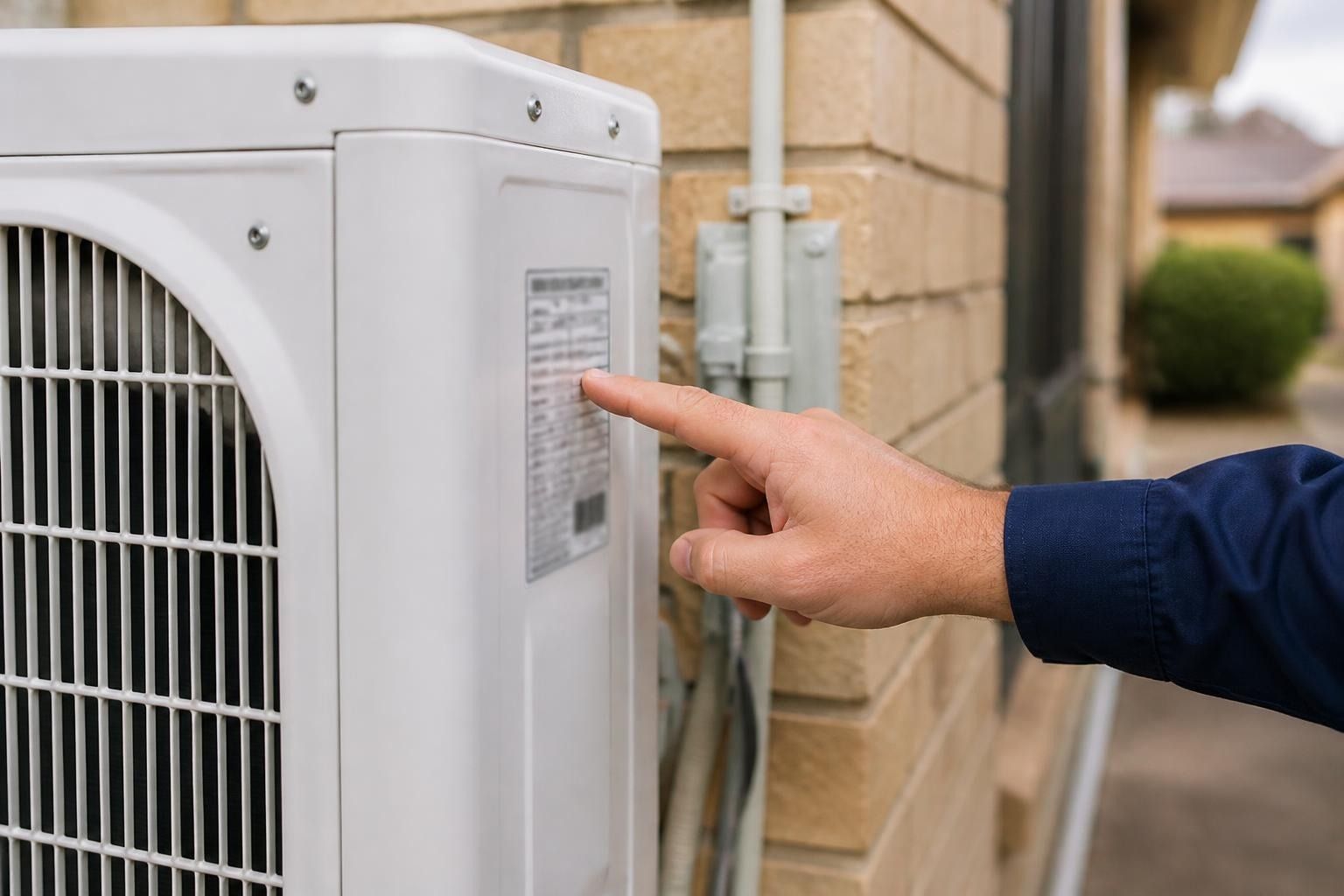
The easiest way to check your own system is to look at the compliance sticker on the side of the outdoor unit, or on the indoor unit under the front cover. It will show the full company name and the model number.
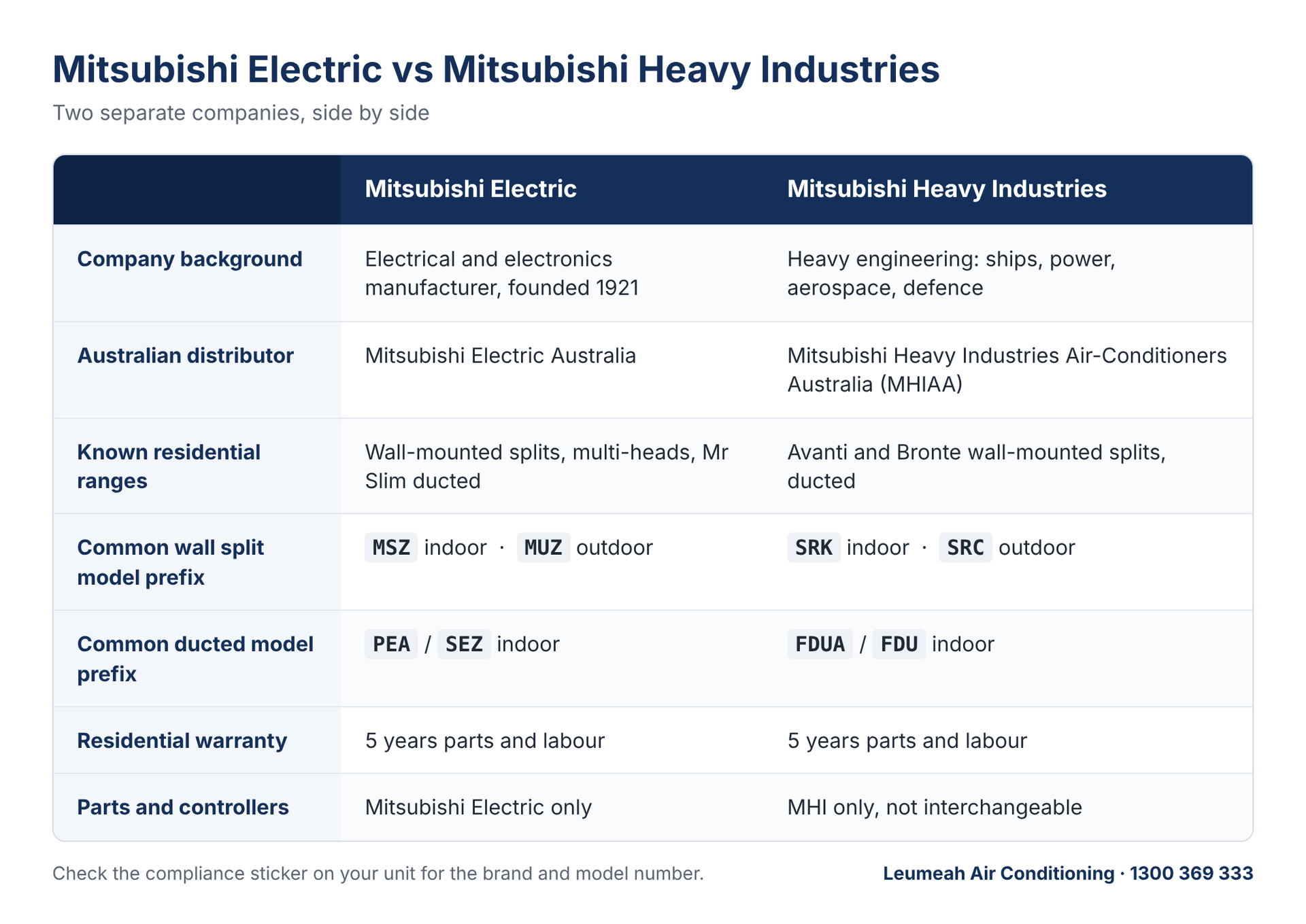
• If it says Mitsubishi Electric, or the model starts with MSZ, MUZ, PEA, SEZ, PUZ or SUZ, you have a Mitsubishi Electric.
• If it says Mitsubishi Heavy Industries, or the model starts with SRK, SRC, FDU or FDC, you have an MHI.
• Check your remote control too. Each brand's remote is labelled with its own name.
When you call us for a service or repair, giving us the full brand name and model number means we turn up with the right parts the first time.
Which one do you need?
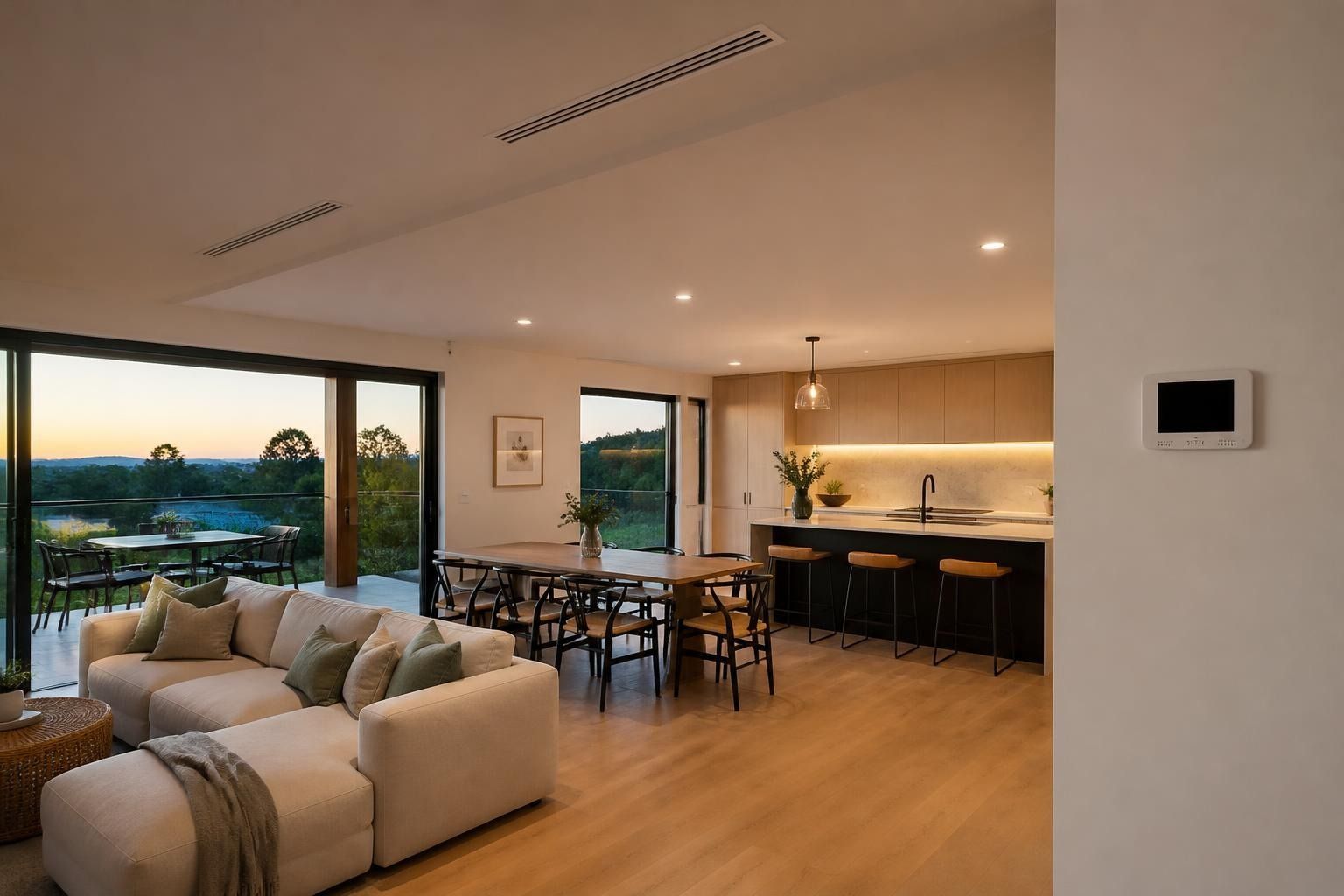
In our experience, Mitsubishi Electric is the better choice for most Sydney homes. Leumeah Air Conditioning has been installing and servicing air conditioners since 1974, and that view comes from what we see on the job year after year.
Here is why we lean towards Mitsubishi Electric:
1. Range depth. Splits, multi-heads, bulkheads, cassettes and Mr Slim ducted systems all come from the one brand. We can match the right unit to each room without mixing brands.
2. Quiet, refined indoor units. Mitsubishi Electric is known for whisper-quiet operation, which matters most in bedrooms and living areas.
3. Controls and app. The Wi-Fi control app is straightforward for homeowners to use day to day.
4. Support and parts. In our experience, parts availability and backup from Mitsubishi Electric Australia make repairs and warranty work smoother for our customers.
That does not mean an MHI unit is a bad buy. If you already own one that is running well, there is no reason to replace it just because of the badge. We service both brands.
If you are buying new, a few questions will point you in the right direction:
• What size space are you cooling? Correct sizing matters more than the brand name.
• Do you want one room or the whole home? Whole-home projects suit a brand with a deep range.
• How long will you stay in the home? A long-term home justifies the best equipment you can afford.
• Who will service it? Choose a brand your installer knows well and can support.
Summary
Mitsubishi Electric and Mitsubishi Heavy Industries share a name and a history, but they are separate companies with separate products, parts and warranties. Both offer 5 years of residential parts and labour cover in Australia. In our experience, Mitsubishi Electric offers the stronger all-round package for Sydney homeowners.
Not sure which brand you have, or which one suits your home? Call Leumeah Air Conditioning on 1300 369 333 or request a quote online. We will give you an honest assessment and the right system for your space.
Sources
• Mitsubishi Electric – Company history, 1920s to 1970s
• Mitsubishi Electric Australia – Warranty information
• MHIAA – Split system brochure